Heavy metals — e.g., lead and cadmium — are present in batteries, food, and other everyday objects, but an abundance in humans can potentially cause serious health problems. However, detecting them in bodily fluids requires expensive equipment and a proper environment. Now, a team at the University of São Paulo (USP) in Brazil has developed an easily sampled portable sensor made of simple materials to detect heavy metals in bodily fluids.
The research — which also involved teams at the São Carlos Institutes of Physics (IFSC) and Chemistry (IQSC), the University of Munich in Germany, and Chalmers University of Technology in Sweden — was published in Chemosensors. Lightning Protection Copper Tape
“We get important information on a person’s health by measuring their exposure to heavy metals,” said Paulo Augusto Raymundo Pereira, last author of the article and a researcher at IFSC-USP. “High levels of cadmium can lead to fatal problems in the airways, liver, and kidneys. Lead poisoning damages the central nervous system and causes irritability, cognitive impairment, fatigue, infertility, high blood pressure in adults, and delayed growth and development in children.
“The world needs flexible sensors that are easily, cheaply, and rapidly mass-produced, as our device is, for on-site detection, continuous monitoring, and decentralized analysis of hazardous compounds.”
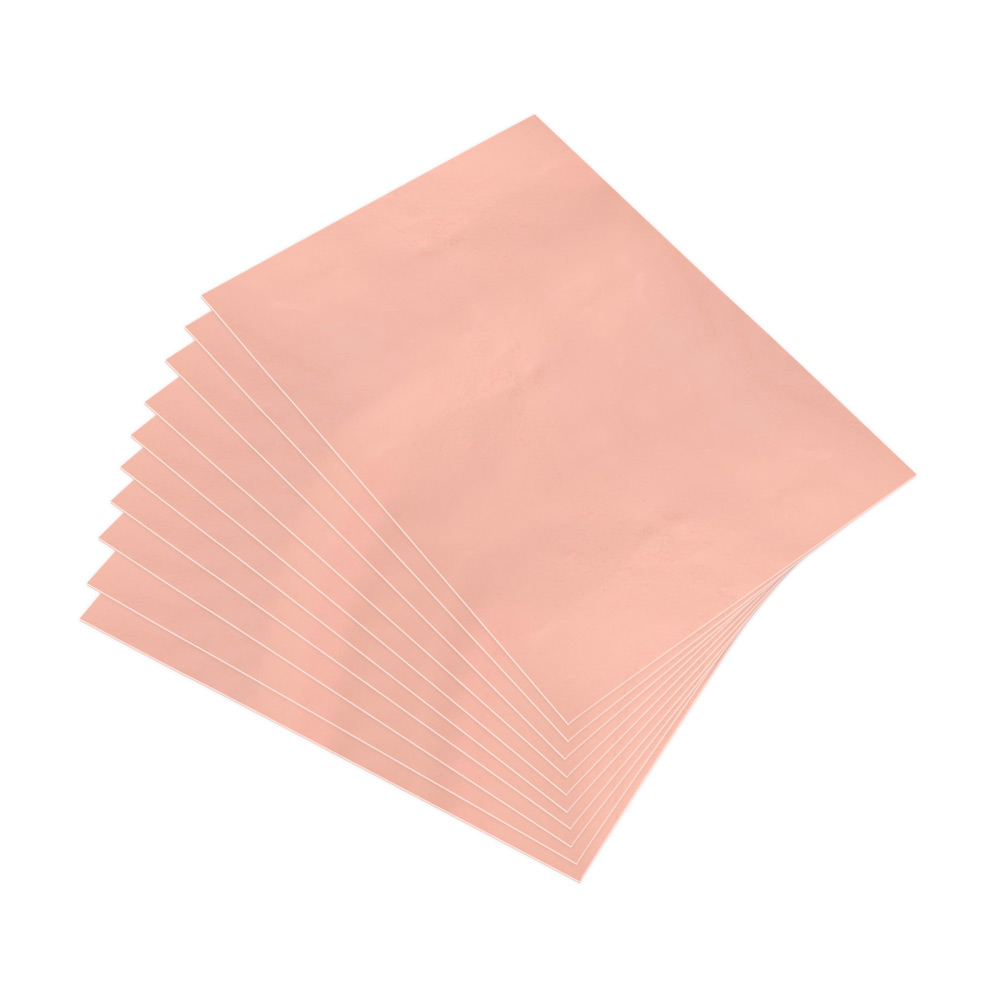
The device’s base is polyethylene terephthalate (PET), on top of which is a conductive flexible copper adhesive tape with the sensor printed on it, and a protective layer of nail varnish or spray, said co-author Robson R. da Silva, Chalmers University. He added that the exposed copper is removed by immersion in a ferric chloride solution for 20 minutes, followed by washing in distilled water. “All this ensures speed, scalability, low power, and low cost,” he said.
The device is connected to a potentiostat, which determines the concentration of each metal by measuring differences in potential and current between electrodes. The result is then displayed on a screen via application software.
“Artesian wells, for example, are regulated and require constant monitoring to analyze water quality. Our sensor can be extremely useful in such cases,” said first author Anderson M. de Campos, University of Munich.
“Until the invention was finalized, we found no reports of flexible copper sensors being used to detect toxic metals in sweat, but an anteriority search would probably turn up something similar, potentially blocking a patent application,” said co-author Marcelo L. Calegaro, IQSC-USP.
As such, the team is working on refinements and additional applications. One potential fix involves replacing the waste-producing corrosion stage by cutting in a paper machine. Another is to use the same type of device to detect pesticides in water and food.
Here is a Tech Briefs interview, edited for clarity and length, with Pereira.
Tech Briefs: What inspired your research?
Pereira: To construct simple and low-cost sensors that can monitor relevant biomarkers in non-invasive samples like saliva, sweat, and urine to enhance the quality of life of humans. My dream is to see our developed sensors available for people to use and improve their quality of life.
Tech Briefs: What were the biggest technical challenges you faced?
Pereira: The biggest technical challenge was obtaining bismuth nanodendrites, with which we conducted a detailed optimization step followed by microscopy analysis using scanning electron microscopy.
Tech Briefs: Can you explain in simple terms how the technology works?
Microneedles Extract Fluid for Wearable Sensors
Pereira: We can divide the answer in two steps: 1) Fabrication method of the sensors in which conductive copper adhesive tape was cut in small pieces and glued onto flexible PET substrate. Copper surfaces were cleaned with paper towels and acetone. A template containing the design of electrochemical devices was cut on an adhesive label sheet using a Silhouette Cameo model 3 cutting machine and glued onto the copper adhesive tape. The entire surface was covered with a polymer layer using nail polish — transferring the design of the devices contained in the template for the copper adhesive surface after removing the mask. The exposed copper was removed by a corrosion step through the immersion of devices in an inexpensive concentrated ferric chloride solution for 20 minutes, followed by a wash step with water. The polymer layer was removed with acetone-soaked paper towels, and then the flexible copper sensors were ready to use.
2) The device is connected to the reader, namely a portable potentiostat and smartphone or tablet or laptop via Bluetooth. The sweat sample is dropped on the sensor surface, and the analysis is performed. The results can be obtained in five minutes.
Tech Briefs: What’s the next step with regards to your research/testing?
Pereira: The next step of our research will be trying to cut the copper tape with the Silhouette Cameo model 3 cutting machine so as not to use the etching step. We will extend the applications to detect pesticides in water and food.
Low-Cost, High-Energy Battery Could Change the Decarbonization Game
10 VR/AR Technologies from CES 2023
Adding Vibrations to Electronics to Reduce Vibrations
EV Motor Improvement With Torque-Dense Materials and Advanced Powertrain Technology
Extending ICE Life for Commercial Vehicles
Future Trends and Challenges for Connector Solutions in Industrial and Commercial Vehicles
Conformal Coatings for Product Reliability and Long-term Performance
The Inside Track: Solutions for Automotive Testing
3D-Printed Prostheses — Accessible and Affordable
Transforming Gaussian Beams into Uniform, Rectangular Intensity Distributions
Blocking Electromagnetic Radiation with the Flip of a Switch
Power Supply for Miniature Quadrupole Mass Spectrometer
Sensors Read Minds and Restore Movement
By submitting your personal information, you agree that SAE Media Group and carefully selected industry sponsors of this content may contact you and that you have read and agree to the Privacy Policy.
You may reach us at privacy@saemediagroup.com.
You may unsubscribe at any time.
Pcb Copper Foil © 2009-2023 Tech Briefs Media Group